| |
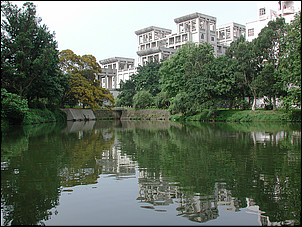
Tsing Hua in Taiwan
The story of Tsing Hua reflects a piece of modern history in Asia. Its
predecessor, the Tsing Hua Academy, was funded with a war indemnity
imposed on the imperial Qing government for its role in the Boxer
Rebellion. It was then a prep-school for China’s talented youths intending
to pursue advanced studies in the United States. The academy was
established in 1911, the year before the birth of the first republic in Asia. In two decades the academy evolved into a full university, the National Tsing Hua University
(NTHU). Its Department of Physics, established in 1926, soon earned the reputation as being one of best physics departments in China. During World War II the
university was forced to move from Beijing, eventually settled in Kunming, and temporarily merged with Peking University and Nankai University to form the National Southwest Associated University. The physics Nobel Laureates, C. N. Yang and T. D. Lee, were
students of the university at that time. In 1956, after the civil war in China, NTHU was reinstalled on its current campus in Hsinchu City, Taiwan. NTHU began its
operations with the Graduate Institute of Nuclear Science (INS), which was then made up of three divisions. The Nuclear Physics Division, the predecessor of the physics department, was one of them. Since then, NTHU has blossomed into a comprehensive research university
offering baccalaureates to doctorates in degree programs ranging from the
sciences, engineering, humanities and social sciences, and management.
NTHU has been consistently ranked as one of the premier universities in
Taiwan and is widely recognized as the best incubator for future leaders in industries as well as academics and government services.
History and Overview
The Department of Physics of NTHU evolved from the Physics Division of INS, admitting its first B.S. students in 1965. In 1966, the Graduate Institute of Physics began its master's program. The doctoral program followed the next year. Due to the growing
importance and local research strength in astronomy and cosmology, the graduate institute of astronomy was established in 2001. Recognizing the importance of physics training for the high-tech industry, an undergraduate concentration in optical physics was initiated in 2003. Currently, there are approximately 250 undergraduates and 150 graduate students (with
about 100 students in the master’s program and 50 in the Ph.D. program). The main facilities of the department are located in a seven-floor-high building, designed by the famed
architect, C. Y. Lee, whose recent works include the Taipei 101 building. The department currently has 35 full-time faculty members, six of whom are associated with the Institute
of Astronomy. Additional expertise is provided by 20 adjunct professors from Academia Sinica, the National Synchrotron Research Center and the National Institute of Health. Their research areas cover particle physics and fields; gravitation and astrophysics; statistical and
mathematical physics; atomic, molecular and optical physics; condensed matters; and microwave and plasma physics. The research atmosphere in the department has always been very strong. Faculty members have been consistently receiving the largest grants for funding for physics-related research projects sponsored by the National Science Council (NSC), Taiwan. The number of times in which faculty members have been recipients of various academic awards is, among physics departments, also the highest in Taiwan. Four faculty members have been elected as members of the Academia Sinica, as are seven of our alumni. Over one-third of our faculty members have received the Outstanding Research Award of the National Science Council. Teaching and mentoring have not been overlooked
either. Each faculty member is also a mentor for undergraduate students, taking care of their needs in school work and addressing problems arising in their daily lives. On the average, each mentor oversees about eight students; consequently, the opportunity for interaction among students and teachers is abundant.
Special Features
Curriculum:
The curriculum is flexible in the sense that the students can adjust the direction of their studies and can put more attention on the subfields which interest them, after they have received solid and basic training in physics. For instance, the department offers introductory courses on topics such as nanoscience, computational physics, and biophysics, in order to
bring the students to the frontiers of research. The department strives to enlarge the students’ scope and vision. Meanwhile, the basics are not overlooked.
Physics Research Promotion Center (PRPC):
A few years after the department was created, the National Science Council decided to establish the PRPC at NTHU. Its main mission is the planning and promotion of physics research in Taiwan. The Physics Research Promotion Center has helped the department
to develop rapidly from its inaugural period in many aspects. One way the PRPC has significantly impacted and enhanced the department has been through them PRPC’s funding and careful management of the library. So far, the library holds more than 45 thousand books and over 500 journals in paper and/or electronic formats. In addition, the library also serves other universities and institutes, through means such as interlibrary loan, ata/references searches, and electronic journal services.
National Center for Theoretical Sciences (NCTS):
In 1997, the National Center for Theoretical Sciences was established at NTHU and National Chiao Tung University, or NCTU (which is another top national university neighboring Tsing Hua). The Physics Division of the NCTS is located near the Physics Building of the department so that many professors and students can participate and organize center activities
such as international conferences and workshops.
Research Highlights
Astronomy and Astrophysics:
The Institute of Astronomy currently contains six faculty members: Hsiang-Kuang Chang, Huei-Ru Chen, Dean-Yi Chou, Ing-Guey Jiang, A. K. H. Kong and Shih-Ping Lai. Major research fields include solar physics, star and planet formation, and high energy astrophysics. Prof. Hsiang- Kuang Chang and Prof. Dean-Yi Chou have cooperated to develop a
remarkable method to construct the three-dimensional image of the solar interior beneath active regions using helioseismological data [Nature 389, 825 (1997)]. This
influential breakthrough is included in the Encyclopedia of Astronomy and Astrophysics. In 2006, the group led by Prof. Chang reported the first detection of 100-meter-size trans-Neptunian Objects through X-ray occultation [Nature 442, 660 (2006)]. More recently, Prof. Kong co-authored an article on the serendipitous discovery of a supernova at the time of its explosion, which was marked by an extremely luminous X-ray outburst [Nature 453, 469 (2008)]. Last but not least, Profs. Huei-Ru Chen, Jiang and Lai have also formed a strong group to study star and planet formation.
Condensed Matter Experiments:
Experimental condensed matter physics has traditionally been a strong research field at the
department. So far, this research branch has the largest number of faculty members (eleven!), graduate students and funding resources. At present, there are five major research areas: (1)
transport properties in nanostructures and spintronics (Profs. Raynien Kwo, Yiping Lin, and Jeng-Chung Chen); (2) superconductivity and strongly correlated electron systems (Profs. Cheng-Chung Chi and Huan-Chiu Ku); (3) surface physics, scanning probe microscopy, and synchrotron-based photoelectron spectroscopy (Profs. Ya-Chang Chou, Shang-jr Gwo,
Rong-Li Lo, Den-Sung Lin and Shu-Jung Tang); (4) X-ray diffraction and its applications in condensed matter physics (Profs. Shih-Lin Chang and Yung-Liang Soo), and; (5) optical spectroscopy (Profs. Cheng-Chung Chi, and Shang-jr Gwo). As an example of recent work, Prof. Gwo’s reported full-color LED based on InGaN/GaN nanorod array and nanodisks
were selected as cover photos of Applied Physics Letters, respectively [Appl. Phys. Lett. 97, 073101 (2010) and 98, 233101 (2011)].
Condensed Matter Theory:
NTHU’s physics department has the largest and strongest condensed matter theory group in Taiwan. Currently there are 7 faculty members: Hsin-Hsiung Chen, working in statistical physics, Tzay-Ming Hong, Hsiu-Hau Lin, Chung-Yu Mou, Po-Chung Chen and
Daw-Wei Wang working on the so-called hard condensed matter theory. Prof. Kuo-An Wu,a softmatter physicist, has recently joined the group. The main research subjects of this group include quantum and classical phase transitions of electronic/spin systems, spintronics, quantum computation, hightemperature superconductivity, low-dimensional correlated systems, magnetism, ultracold atoms, dilute magnetic semiconductors, and nano-or mesoscale
physics. Exemplary works include Prof. Mou’s work identifying the importance of dipole interaction in the effective potentials for folding proteins [Phys. Rev. Lett. 96, 078103 (2006)] and Prof. Hong’s work on spontaneous emergence of ordered phases in crumpled
sheets, which was selected as the cover photo of the Dec. 31, 2009 issue of Physical Review Letters [Phys. Rev. Lett. 103, 263902 (2009)].
Particles and Fields:
Currently, there are three faculty members in this group: Chao-Qiang Geng, Kingman Cheung, and We-Fu Chang working on high-energy theory. Prof. Geng is an expert in Kaon and B meson physics, in particular the T and CP violations. His work in T violation has
received lots of attention internationally. Recently, his work on baryonic decays of B mesons has proven to be very useful for experimenters. Prof. Cheung is known to be one of the best collider physics phenomenologist in his generation. He has been working on various new
physics beyond the standard model, including extra dimensions, supersymmetry, and GUT models. With the upcoming LHC experiment in CERN his works will continue to be valuable to experimenters. Prof. Chang is well known as a two-loop specialist -- his contributions to g2 and EDM via the two-loop diagrams have been highly cited. He also works on CP violation
and other related phenomenology."Since August 2014, Prof. Pai-hsien
Jennifer Hsu has joined our department, who is heavily involved in the
analyses of the Higgs boson and other new physics at the ATLAS
experiment at the LHC."
Plasma Physics:
The plasma group consists of three faculty members: Kwo-Ray Chu (recently retired), Tsun-Hsu Chang and Chwung-Shan Kou. Prof. Chu was the recipient of the 2001 K. J. Button Medal and Prize of the Institute of Physics and the Plasmas Science and Application
Award of the IEEE Nuclear and Plasma Sciences Society [See his article on the electron-cyclotron maser, Rev. Mod. Phys. 76, 489 (2004)]. Together with his protege, Prof. Chang, Prof. Chu pioneered the electron-beam-driven gyrotron devices and their application to space science and defense. In the mean time, Prof. Chang studied the nderlying physics of the relativistic cyclotron maser interaction in theory and experiment. He is currently working on the development of tunable kilowatt-class sub-THz sources and has used these sources to process some advanced materials. Prof. Kou’s research focuses on the
interaction between electromagnetic wave and plasma so as to develop new plasma sources. He has invented a large area planar microwave plasma source and a plasma metallic ion source.
Atomic/Molecular and Optical Physics:
There are five experimentalists in this group: Li-Bang Wang, Yi-Wei Liu, Jow-Tsong Shy, Ite Yu and myself. Prof.Wang, Liu, and Shay worked on highprecision laser spectroscopy. Prof. Yu worked on cold atoms and quantum optics while I am a laser scientist mainly focused on ultrafast and THz photonics. Working with international collaborators, Prof. Liu and co-workers recently determined that the root-meansquare charge radius of the proton determined spectroscopically in ‘muonic hydrogen’ in which the electron is replaced by the heavier muon - is about 4% smaller than the previous value. The “shrinking proton” became the cover story of Nature in its July 8, 2010 issue (Nature, 466: 213-216, 2010). Prof. Shy’s
group, in the meantime, obtained the most accurate transition frequencies of two-electron molecular ions H3 + and HeH+ using a PPLN DFG source. Among other achievements, Prof. Yu and collaborators recently demonstrated that single photons with a prescribed temporal shape, in the presence of interfering noise, may be hidden and recovered [Phys. Rev. Lett.
104:223601 (2010)].
The
Physics Research Promotion Center sponsored by the
National ,Science
Council was established in NTHU in 1965. The main mission
is for the planning and promotion of physics research
in the whole nation. The Promotion Center Library was
also established, which the most complete collections
of books and journals for the whole physics community
in Taiwan.
The
National Center for Theoretical Sciences was
also founded in 1997 and established at NTHU and NCTU.
The Physics Division is located in the Physics Building
of the department such many professors and students can
participate and organize many center activities. Good
foundation of exchanging ideas and interactions has significantly
improved the research environment and is now taking a
leading role in the national theoretical research in
various areas.
The
Taiwan Institute of Advanced Research in Astrophysics
(TIARA) was
established in NTHU in 2004, which hopes to be one of
the world-class research institute in astronomy.
Divisions
The
undergraduates in our department are classified into
two divisions: physics and photoelectric divisions, while
the Master students are classified into physics, applied
physics, and photoelectric divisions.
Curricula
In
the design of the curricula in the department, the first
two years contain most of the mandatory subjects, including
general physics, general physics laboratory, mechanics,
electromagnetism, experimental physics. These are the fundamentals
for more advanced subjects. In the third year, other than
quantum physics, thermal physics and modern physics, all
the other classes are elective. A student is required to
take at least 130 credits to graduate. The best students
should be able to finish in three years. Our department
also has special curricula for students intending for applied
sciences such photo-electrics, material sciences, computational
physics, and biophysics. Students can be admitted to the
graduate school after they passed the examination. Since
the curricula is quite flexible, the teachers will advise
the students, according to their interests and the past
grades, to choose the best stream for the students, which
is very beneficial for their future after graduation.
Double
Majors, Minors
When
the students fulfill certain level, they can apply for
a double major or a minor. Since the method was introduced,
more than 21 graduates have the second major in either
mathematics, computer sciences, or electric engineering,
and more than 47 have obtained a minor in mathematics,
biological sciences, electrical engineering, material sciences,
or economics.
Teachers
curriculum
If the student satisfies, in addition
to all the graduate credits, 26 credits in teachers'
education and fulfill other requirements in practice,
he/she will be qualified as a secondary school teacher.
Physics
Building
The
physics building is a seven-story building of about 3,800 "pings" (1 "pings" is
about 3.5 sq. meters). We have various well-equipped classrooms
and laboratories, audio-video classrooms with well-equipped
hardwares and softwares, self-study rooms, a library, and
a computer
room.
Audio-Video
classroom and Colloquium
In
the modernized Physics Building, there are two audio-video
classrooms for lectures and special needs in teaching.
Each one has 130 seats and advanced audio-video equipments,
which substantially raise the efficiency in teaching. Our
physics often invites well-known scholars from local and
abroad to give lectures in these two rooms, e.g., the Honor
Chair professor Ta-You Wu hold a lecture series of fundamental
physics on each Friday in these rooms.
Library
Besides
the excellent collections in the Main Library, our department
also includes a departmental library set up by the Physics
Research Promotion Center. The Physics Library occupies
a space of 210 "pings" and has more than 180
journals from aboard and Taiwan, and 16,000 books. This
is the largest physics library in the nation.
Computer
Room
The
computer room has 14 workstations, a number of personal
computers, which are all connected to the internet.
Student
Study Room
The
department has set up a special "K" room for
undergraduate students, which opens 24 hours a day. It
has more than 60 desks and 100 lockers with sufficient
lighting and air-conditioned.
 The
future after graduation The
future after graduation
Physics
is the subject of fundamental sciences that can be applied
to various sciences and engineering. At the same time,
physics provides excellent training in ability in critical
thinking, deduction, and problem solving. Therefore, our
physics graduates are well equipped under the excellent
teaching and research environment. Not only can they continue
their studies in physics, material sciences, atomic sciences,
electrical engineering or biological sciences, but also
have broad development in various industries like semi-conductor
manufacturing, electronics, photo-electrics, instruments,
or computer sciences. Our alumni has very well performance
in both academics and in industry. A lot of them have been
the professors or management directors and research and
development managers in industries.
Summary
The physics department at NTHU is a place full of enthusiastic and joyful physicists, exploring fascinating physics while passing on the mission and training to the next generation, with flexibility for them to adjust the brand new world and lots of room to cultivate their
creativity. For more and updated information, please visit our website http://www.phys.nthu.edu.tw
|
Research
Interests |
Faculty
Profiles |
|
Particle
Physics Theoretical |
Geng,
Chao-Qiang、Cheung, Kingman、Chang, We-Fu、Chu,Chong-Sun、He,Xiao-Gang、Li
,Ling-Fong |
|
Astrophysics |
Jiang,
Ing-Guey、Kong, Albert、Chou, Dean-Yi、Chen, Huei-Ru、Chang,
Hsiang-Kuang、Lai, Shih-Ping、Goto, Tomotsugu |
|
Atomic,
Molecular and Optical Physics |
Pan,
Ci-Ling、Wang, Li-Bang、Yu, Ite Albert、Shy, Jow-Tsong、Liu, Yi-Wei、Chuu,
Chih-Sung |
|
Microware
Physics |
Chang,
Tsun-Hsu、Kou, Chwung-Shan |
|
Condensed
Matter Physics
(Th.) |
Wang,
Daw-Wei、Mou, Chung-Yu、Lin, Hsiu-Hau、Chen, Po-Chung、Wu,
Kuo-An、Horng-Tay Jeng、Miguel Cazalilla |
|
Condensed
Matter Physics
(Exp.)
|
Ku, Huan-Chiu、Lin, Deng-Sung、Chou,
Ya-Chang、Gwo, Shangjr (Felix)、Tang, Shu-Jung 、Kwo, Ray-Nien
、Chi, Cheng-Chung 、Chen, Jeng-Chung、Chang, Shih-lin、Tai,
Ming - Fong、Lo, Rong-Li、Soo, Yun-Liang、Hoffmann Germar |
|
Experimental Particle Physics |
Hsu,Pai-hsien Jennifer |
|